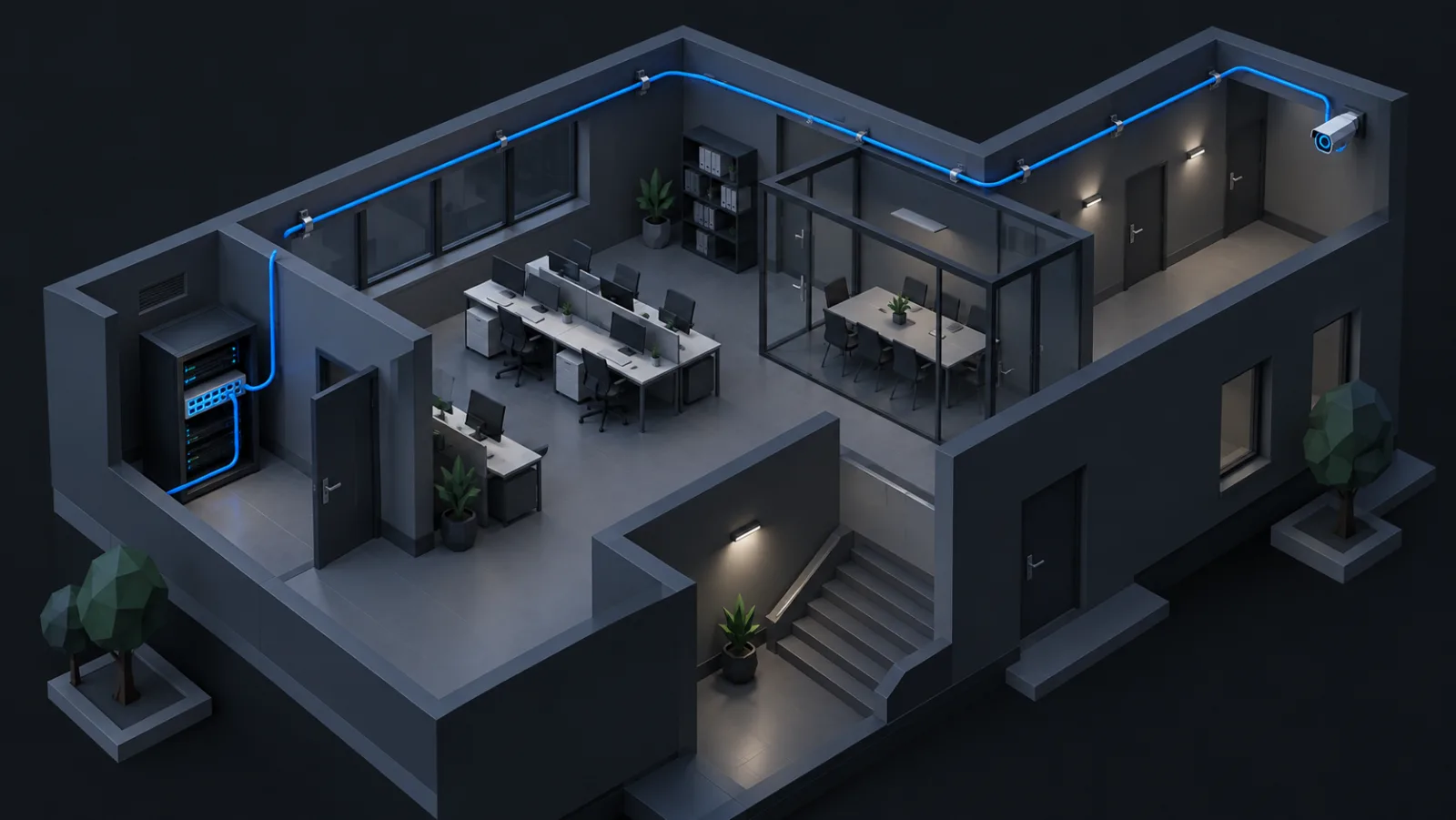
A camera on a plan is a promise that a cable can reach it. Most cameras take power and data over one Ethernet cable, which makes the run simple and puts a hard limit on it. Placing cameras without the cable in mind is how a design gains a mid-span switch, a second cabinet and a week.
The 100 m rule
Ethernet over twisted pair is specified to 100 m of channel: 90 m of solid-core cable in the wall plus 10 m of patch leads at the ends. Past that, link speed drops and PoE voltage sags. The 100 m is measured along the cable as installed, up the wall, across the ceiling and around the corner, and a straight-line distance on the plan of 60 m routinely becomes 95 m of cable. Draw the route, or at least the cabinet position, and measure along it.
PoE classes
Power over Ethernet comes in steps, and the switch port has to supply what the camera draws at the far end of the cable:
- 802.3af, PoE: 15.4 W at the port, about 12.9 W at the camera. Fixed domes, turrets and bullets with modest IR.
- 802.3at, PoE+: 30 W at the port, 25.5 W delivered. Larger bullets with long IR, heated outdoor housings, most PTZ domes.
- 802.3bt, PoE++: 60 or 90 W. Big PTZ units, multi-sensor cameras, anything with a heater and a wiper.
The datasheet gives a maximum draw. Add the class up, then add the port count up: a 24-port switch with a 370 W PoE budget feeds 24 cameras at PoE but only 12 at full PoE+. Budget for the IR turning on at night, which is when the draw peaks, and for the heaters in winter.
Beyond 100 m
Four honest answers, in order of preference:
- Move the switch. A small PoE switch in a lockable enclosure near the far cluster, fed by one fibre or one long copper run, is the usual answer for a yard or a second building.
- A PoE extender in line, which buys another 100 m per unit and one more thing to fail in a ceiling void.
- Fibre to a media converter at the camera end, with local power. Immune to lightning and distance, at the cost of an outlet at the far end.
- A wireless bridge. It works, and it is where the support calls come from.
Outdoors
A cable that leaves the building needs to be rated for it: UV-stable jacket, gel-filled or shielded if it runs in a duct, and a surge protector at the entry point. Lightning finds the long copper run to the pole camera before it finds anything else on the site.
On the drawing
Mark the cabinet, the cable path and the run length for every camera in the schedule. A layout that shows 27 cameras and one cabinet in the corner is a layout that will move on install day; one that shows the lengths will get priced right the first time.