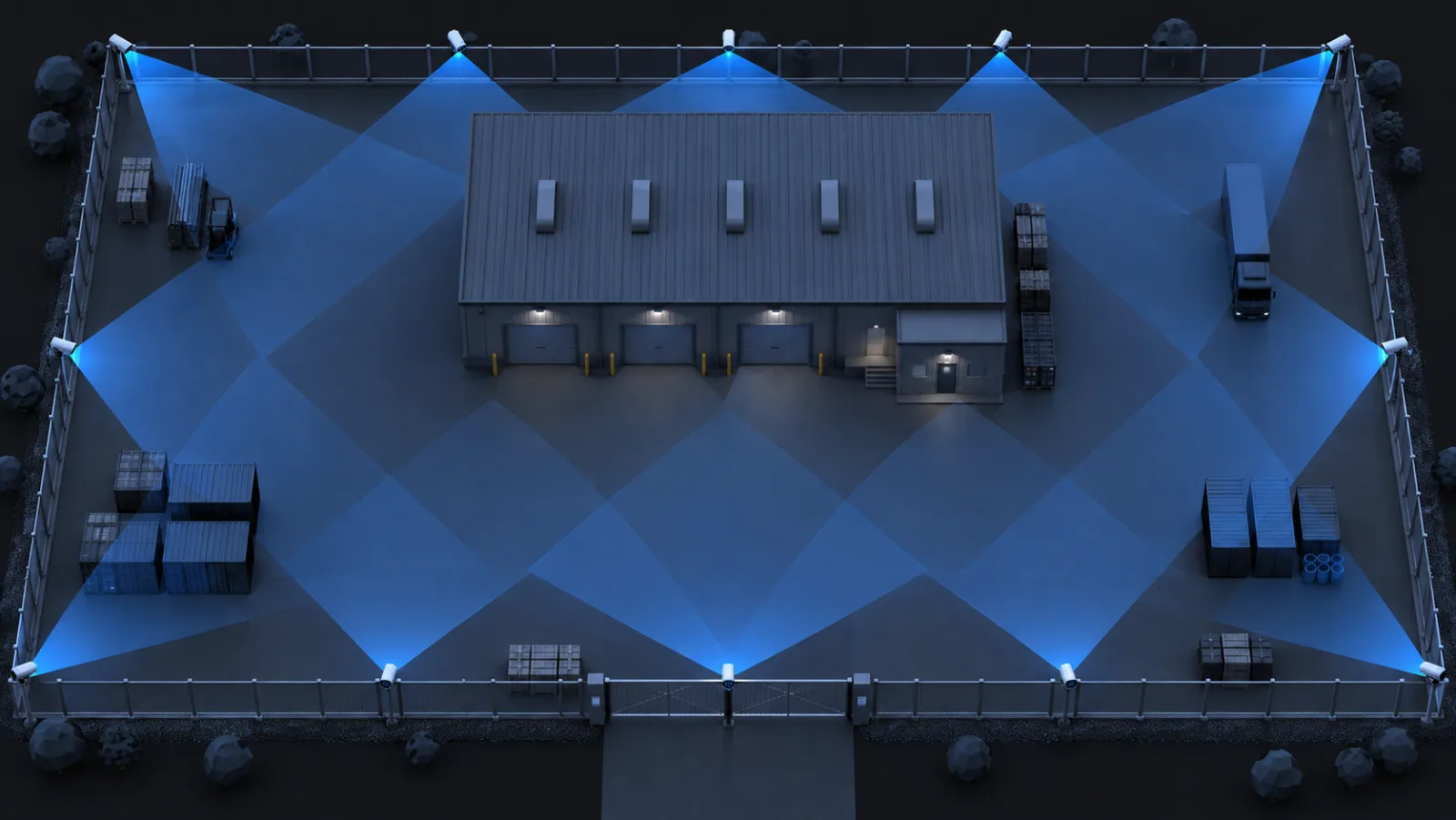
Indoors, a room is a few cones. Outdoors and in warehouses the space is ten times larger and the temptation is to reach for the widest lens and the tallest pole. That gets a picture of the whole area and identifies nobody in it. Large areas are tiled, and the tiling is decided by what the client needs to see.
Decide the quality first
Ask what the recording is for. A yard where the question is "did a truck leave at 3 a.m." needs detect and observe: wide cones, few cameras. A warehouse where the question is "who took it off the shelf" needs recognise at every aisle: many cameras, each narrow. Mixing the two in one camera fails both. Put the quality level on the drawing per zone before placing anything.
Tile with overlap
A cone at observe quality from a 4 MP camera with a 90° lens is about 20 m deep before density drops below 62 px/m. Lay those out like roof tiles: each camera's cone overlaps its neighbour's by a few metres, so a person walking the yard is always in at least one cone above the threshold and the handover between cameras shows the same person from two sides. A 60 by 80 m yard tiles with eight to ten cameras on the perimeter looking in, which is fewer than one tall pole in the middle would suggest and far more useful.
Perimeter, looking in
Cameras on the fence line looking inward see faces approaching and keep the lens out of the weather that blows in. Cameras on a central pole looking out see backs and put the lens in the rain. The centre pole is for the PTZ, if there is one, and for the lights.
Warehouse aisles
Racking is a wall for a camera. Each aisle is a corridor and gets a corridor camera at one end, corridor-format, with a lens long enough to reach the far end at observe. Cross-aisles are where people leave the racking with the goods; a camera looking along each cross-aisle at recognise quality catches the exit. The main door, the goods-in bay and the packing bench get identify cameras in the usual way. A 5,000 m² warehouse with twenty aisles is forty cameras, and the drawing is how that number gets accepted rather than argued.
Height
Outdoors, 4 to 6 m keeps the camera out of reach and off the trucks; higher than that and faces tilt away. In a warehouse the racking dictates: mount just below the top beam, looking down the aisle, or the pallets on the top level are the only thing in view.
What to give up
Identify quality across a large area is a camera every 10 m, which is a budget nobody has. The honest plan puts identify at the choke points, the gate, the doors, the packing bench, observe across the floor, and detect on the far fence. The blind-spot view shows what that costs in gaps, and the gaps are chosen rather than discovered.